Get a Coachella Valley Mortgage When Your Earnest Money Deposit Is Cash
Learn how to document a cash earnest money deposit for a Coachella Valley mortgage. What underwriters need, what to avoid, and how to prevent delays.
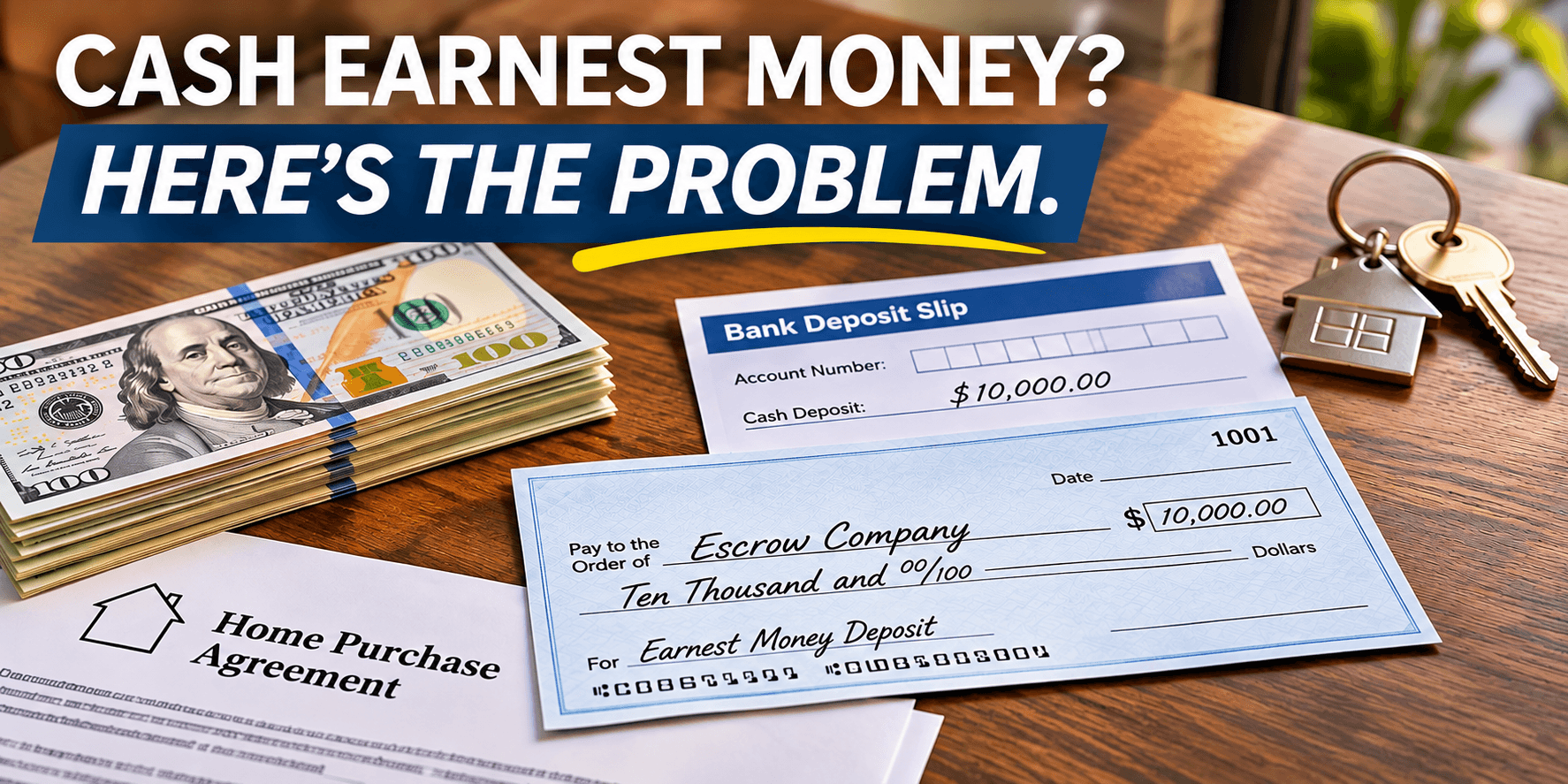
If your earnest money deposit is coming from cash, the main concern isn’t whether you’re allowed to use it. The concern is documentation. In mortgage underwriting, cash is often the hardest form of money to “source,” meaning the lender has to understand where it came from and be able to follow it into the transaction. If the paper trail is unclear, it can create last-minute questions, extra conditions, or even a delay in closing.
This comes up regularly for buyers across the Coachella Valley—Palm Desert, Palm Springs, Rancho Mirage, La Quinta, Indian Wells, Indio, Cathedral City, and Desert Hot Springs—especially when someone has been saving cash over time, received cash from family, or recently sold personal items.
Below is a practical way to think about the problem and the cleanest solutions, so you can protect your timeline and keep your purchase moving.
The core issue: cash is hard to “source” in underwriting
Underwriting is basically a verification process. The lender is confirming that the funds you’re using for the purchase are acceptable under the loan program rules and that they don’t create undisclosed debt or other risk.
When money is already in a bank account, it’s usually easier to document because bank statements show a running history. But cash is different. If you hand over cash for the earnest money deposit (or deposit cash right before you write the check), the underwriter may ask:
1) Where did this cash come from?
2) Can we document it in a way that meets the loan guidelines?
That’s why “cash EMD” can turn into an underwriting speed bump. It’s not personal, and it doesn’t mean you did anything wrong. It just means the documentation has to be handled carefully.
What underwriters typically need to see (and why)
While exact requirements can vary by loan type and lender, the documentation usually centers on two things:
1) Proof the earnest money cleared
The lender typically wants evidence that the earnest money deposit was paid and processed. This often includes a copy of the earnest money check (front and back if available) and/or a transaction history showing it cleared.
2) A clear trail from your account to the deposit
In many cases, the lender wants to see that the funds used for the earnest money came from an account you own (or an acceptable source like a properly documented gift). That’s why the cleanest path is often: funds are in your bank account first, then the earnest money is paid from that account.
If cash is involved, the “trail” can get fuzzy. A large cash deposit right before the earnest money check clears can trigger questions because it’s not obvious where the cash came from.
The cleanest ways to handle a cash earnest money deposit
Let’s focus on solutions that reduce friction.
Solution 1: Pay the earnest money from a bank account with documented funds
If you have enough funds in your checking or savings account already (and those funds are visible on your bank statements), paying the earnest money from that account is usually the simplest approach.
What to do:
- Before you write the earnest money check, confirm the account has enough funds that are already documented on your statements.
- Avoid making a cash deposit right before writing the check if you can.
Why it helps:
- The underwriter can see the funds on the statement and match the check clearing.
Solution 2: Deposit the cash early enough that it’s not a last-minute surprise
Sometimes the cash is legitimately yours, but it’s been kept outside the banking system. If you need to use it, timing matters.
What to do:
- Deposit the cash well before you go under contract (or as early as possible once you know you’ll be buying).
- Keep your deposit receipt and make sure the deposit appears on your bank statement.
Important note:
- A deposit receipt shows that cash was deposited, but it may not fully answer “where it came from.” Depending on the loan program and the size of the deposit, you may still be asked for an explanation.
Solution 3: If the cash is from a gift, document it as a gift (don’t treat it like “just cash”)
If a family member is helping and they give you cash, it’s tempting to deposit it and move on. But that can create questions later.
What to do instead:
- Talk with your loan advisor before you accept the funds.
- In many cases, it’s cleaner for the donor to provide the gift through a traceable method (for example, a check or wire) and to complete the required gift documentation.
Why it helps:
- Gift funds often have specific documentation rules. Following them upfront is usually easier than trying to explain a cash deposit after the fact.
Solution 4: Use documented funds for earnest money, and keep the cash out of the transaction
In some situations, the simplest move is to separate the two issues:
- Use documented funds for the earnest money deposit.
- Keep the cash as reserves or for non-closing expenses (as allowed), rather than trying to push it through underwriting at the last minute.
This isn’t always possible, but when it is, it can reduce conditions and stress.
Common mistakes that create delays (and how to avoid them)
Here are a few patterns that tend to cause underwriting follow-up.
Mistake 1: Depositing a large amount of cash right before the earnest money check clears
Why it’s a problem:
- It can look like the funds were borrowed or came from an unknown source.
Better approach:
- If you must deposit cash, do it early and talk through documentation expectations before you write the check.
Mistake 2: Using multiple partial cash deposits with no explanation
Why it’s a problem:
- Multiple deposits can be harder to explain than one clear, planned deposit.
Better approach:
- Consolidate your plan and document it. If the cash came from a specific event (sale of an item, withdrawal history, etc.), discuss what documentation may exist.
Mistake 3: Assuming “it’s my money” is enough
Why it’s a problem:
- Underwriting is about verifiable documentation, not just intent.
Better approach:
- Treat documentation as part of your purchase strategy, just like inspections and appraisal.
Mistake 4: Waiting until the lender asks
Why it’s a problem:
- If the question comes up late, you may be trying to solve it while you’re also dealing with appraisal, insurance, and final conditions.
Better approach:
- Bring it up early. A five-minute conversation can prevent a week of back-and-forth.
A simple checklist to use before you deliver the deposit
If you’re about to write or deliver earnest money for a Coachella Valley home purchase, here’s a practical checklist.
1) Confirm how the earnest money must be delivered
Ask your real estate agent or escrow:
- Is it a personal check, cashier’s check, or wire?
- Who is it payable to?
- What’s the deadline?
2) Identify the exact account the funds will come from
- Which bank account will the check or wire come from?
- Are the funds already in that account and visible on statements?
3) Avoid last-minute cash deposits if possible
- If you’re planning a cash deposit to “cover” the earnest money, pause and talk with your loan advisor first.
4) Keep proof that the earnest money cleared
- Save a copy of the check and any escrow receipt.
- If it’s a wire, keep the wire confirmation.
5) If any part of the funds is a gift, treat it like a gift from day one
- Don’t run it through cash first.
- Ask what documentation will be required so you can do it cleanly.
Next step: talk through your exact scenario before you write the check
Every buyer’s situation is a little different. The size of the deposit, the loan program, your account history, and the timing of your contract all matter.
If you’re buying in Palm Desert, Palm Springs, Rancho Mirage, La Quinta, Indian Wells, Indio, Cathedral City, Desert Hot Springs, or anywhere else MortgageWorks is licensed, a quick planning call can help you choose the cleanest way to handle earnest money—especially if cash is involved.
The goal is simple: keep your documentation easy, keep underwriting calm, and keep your closing on track.